Record pace demands faster foundations
Overhead power lines, 5G masts, and other telecommunication structures are being built at a record pace, driven by the ever-growing demand for energy and data connectivity. In these projects, foundations must be absolutely reliable, yet conventional methods are often slow and multi-step, pushing costs unnecessarily high.
Paalupiste's helical piles offer a practical, efficient, and modern alternative for these applications.
Installation speed as the standout advantage
The standout advantage is installation speed. No large excavations or concrete are required. Once the piles are screwed in, mast or tower erection can start immediately as the next step. This delivers significant savings in both time and overall costs. The benefit is especially clear in difficult ground or weather conditions, or when speed is critical.
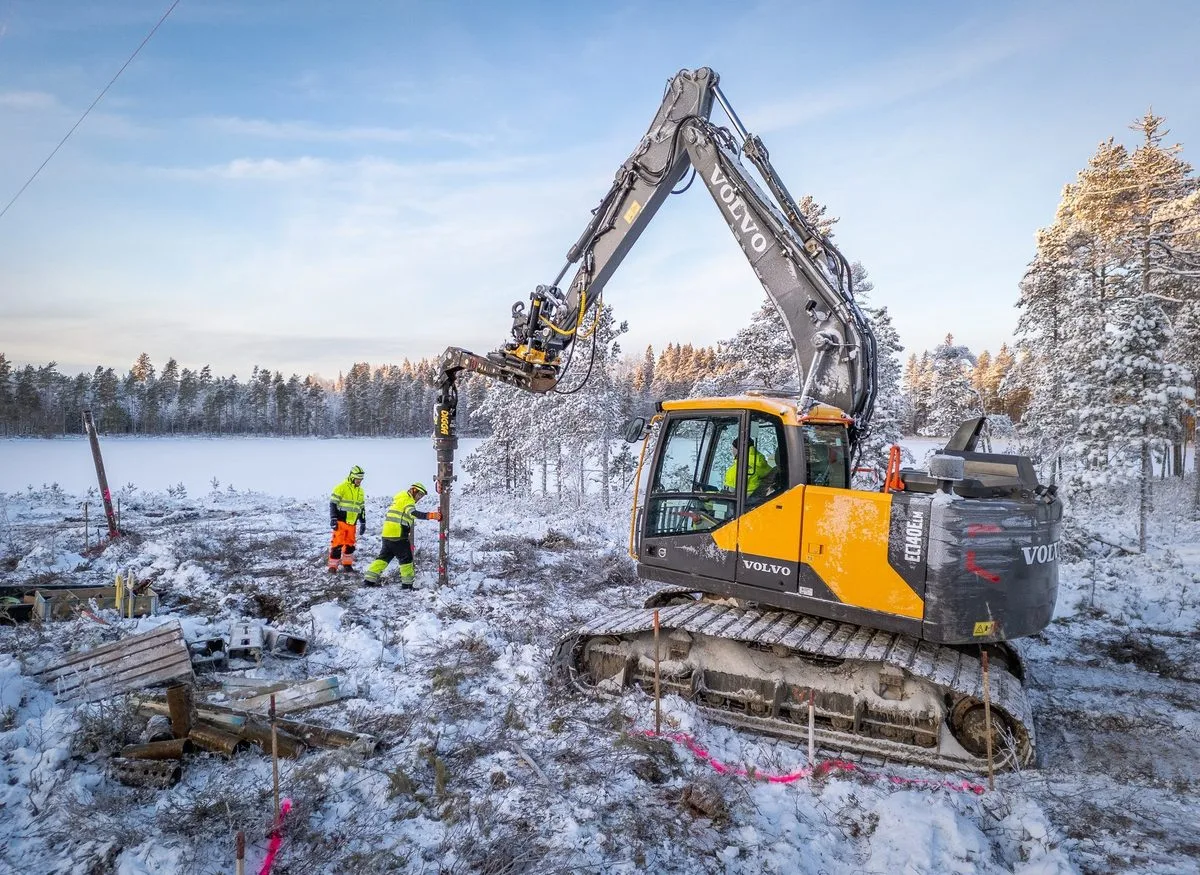
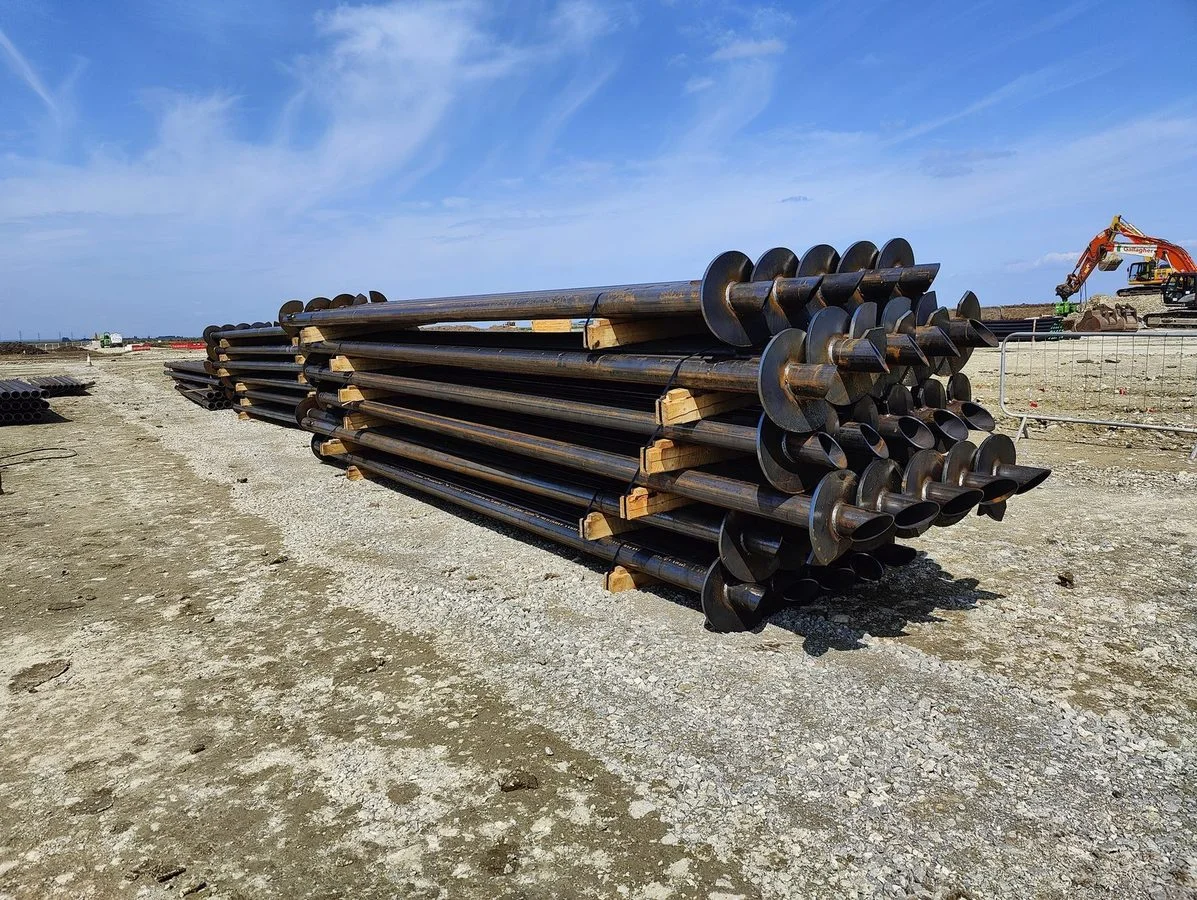
Even larger helical piles are easy to transport to remote or challenging sites. For power masts, a standard 15 to 20 tonne excavator is usually sufficient, keeping site preparation minimal and environmental disturbance to a bare minimum.
Design and capacity for high-voltage lines
Our designers size the piles based on preliminary soil investigations to match the exact site conditions and load requirements. With Europe's most powerful helical drive units, capable of over 100,000 Nm torque, we install the large-diameter piles needed for high-voltage lines. We provide cost-effective, rapid solutions all the way up to 400 kV lines.
In a typical 110 kV overhead line, for example, one heavy-duty pile per leg plus four guy anchors is often all that's required. The two-pile method keeps total costs firmly under control: on average less than 5,000 euros per mast, including piles, transport, installation, and fittings.
Accurate load data from every pile
Another key strength is the accurate, pile-specific load data obtained during installation. This level of reliable information is not always as readily or certainly available with traditional timber piles, for instance.
Sustainability built in
Helical piles also align perfectly with sustainability goals. At the end of the structure's service life, the piles can be unscrewed, recycled, or reused. Nothing is left permanently in the ground, unlike concrete foundations. This reduces long-term site impact and significantly lowers the project's carbon footprint.
The result
Paalupiste's helical piles bring clear speed, cost efficiency, and environmental benefits to power transmission and telecommunication projects without any compromise on reliability or long-term durability.