A garage benefits from a screw pile foundation
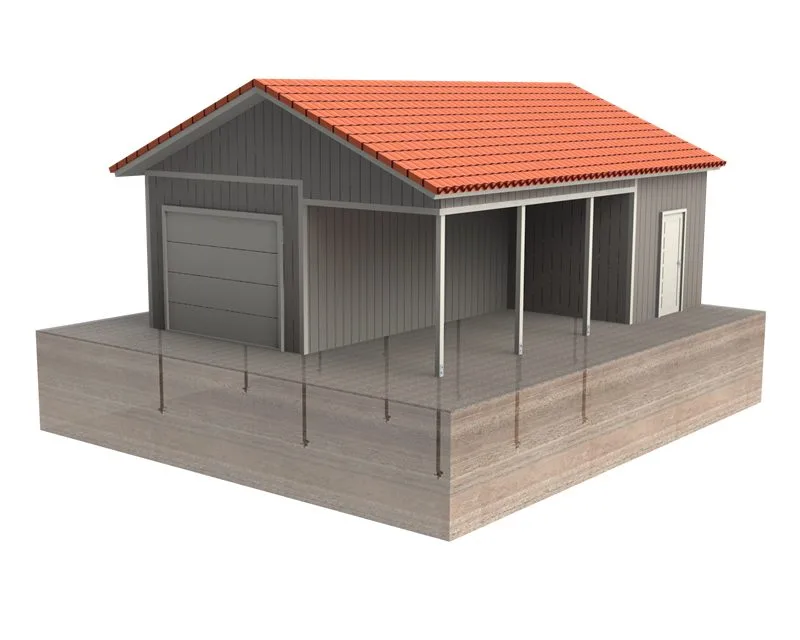
A garage is a utility building whose foundation must support the walls, roof and snow load. At the same time, the foundation must be frost-proof. A screw pile foundation meets these requirements in a straightforward manner: the piles are screwed into the bearing layer by an excavator, and the site requires no excavation, formwork or concrete pouring. Framing can begin immediately after installation.
PRO series screw piles. Garage foundations typically use Ø76.1 mm or larger sizes. For the smallest and lightest projects, Ø60.3 mm piles can also be used.
Pile sizing
Garages vary widely: from a single-car garage to a three-car garage that may also include storage or workshop space. The pile size, length, helical plate diameter and layout are always determined according to the loads, the structural type and the ground conditions of the specific project.
Factors affecting the design include the building size, frame material (timber or steel), roof weight, snow load, floor solution, building height above ground and the soil bearing capacity and frost depth. The right pile selection is always based on project-specific information, and we are happy to assist with the design.
The Paalupiste PRO series covers diameters from 60.3 to 323.9 mm and helical plate sizes from 150 to 1,000 mm. A single pile can have a load capacity exceeding 1,000 kN, so the same product family serves everything from a small garage to a heavy industrial hall.
Pile layout
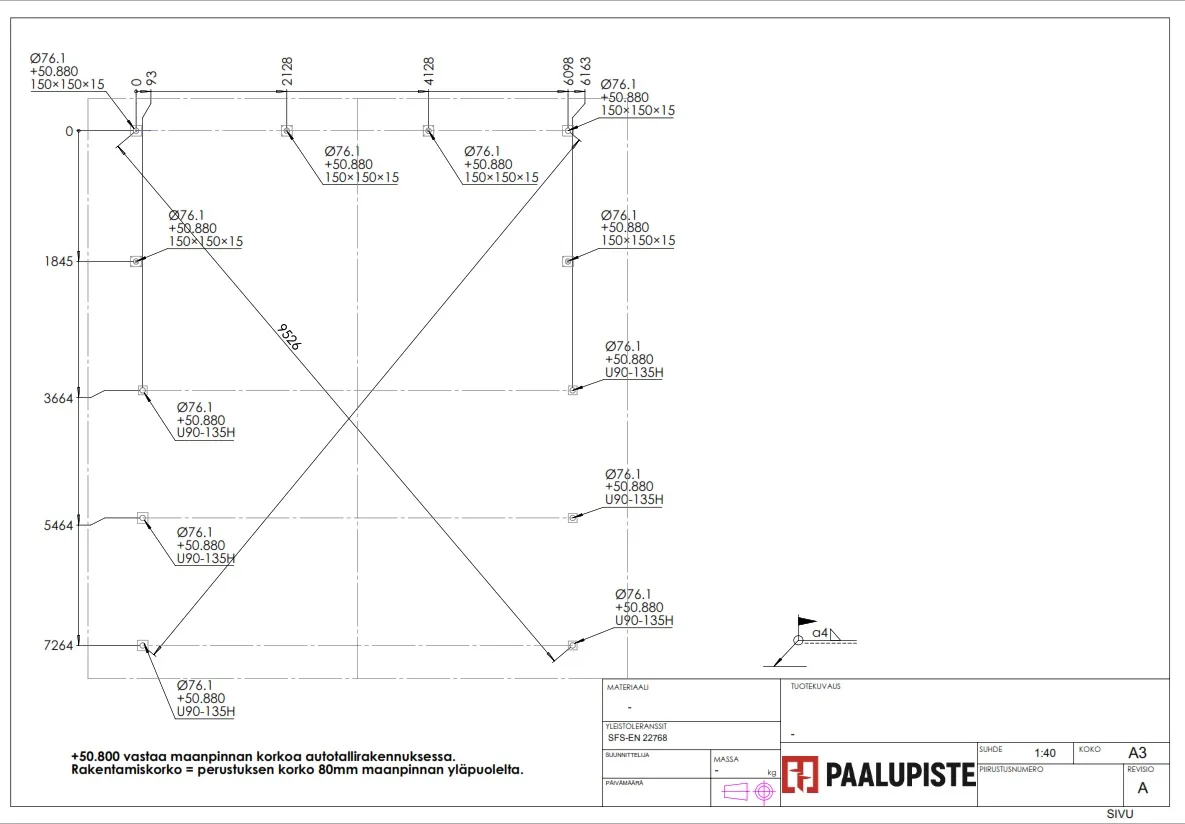
Piles are placed beneath load-bearing walls, columns and corners. A typical pile spacing is approximately 2.2 to 2.5 metres, but it can also be longer. Rarely is the pile spacing limited by the load capacity of the piles themselves; more often, it is determined by the span capacity of the load-bearing bottom plates or other structural members. At door openings, piles are placed on both sides of the opening.
Floor solutions
A garage floor can be constructed in several ways depending on the intended use, the ground conditions and the desired floor finish:
Earth floor
The majority of garages and carports have earth floors. No slab is poured; a compacted crushed aggregate base is sufficient. The screw piles carry the walls and roof, and the floor is finished with gravel or asphalt. This is the simplest and most cost-effective solution when there are no special requirements for the floor.
Load-bearing timber floor
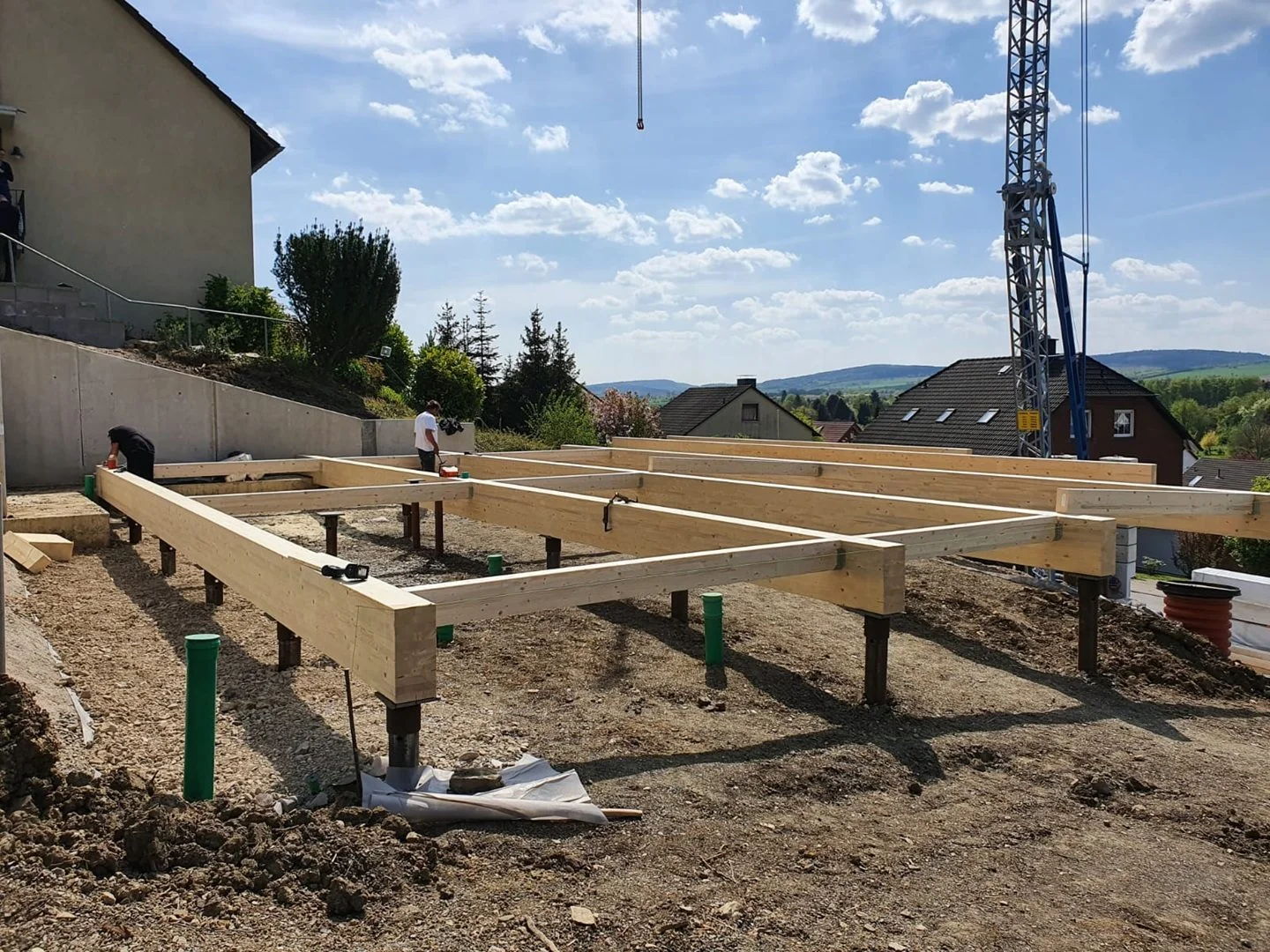
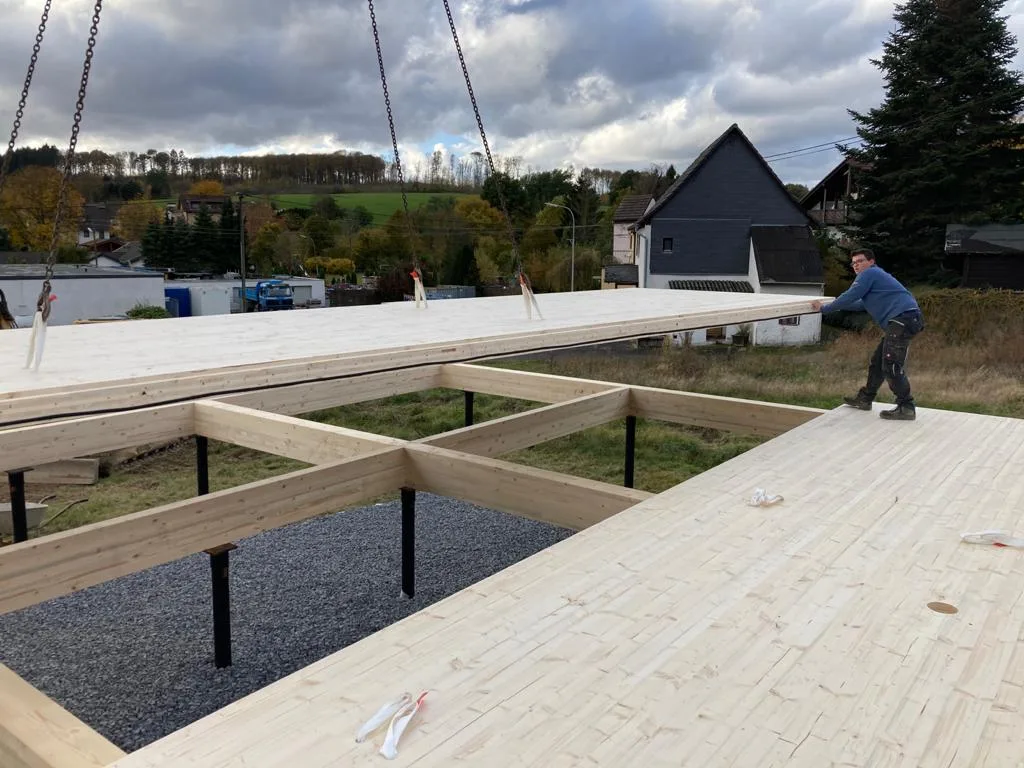
Floor joists are fixed to the brackets on top of the piles. This solution is suitable for sites where the ground is uneven or the building sits well above ground level. It is the fastest and most economical to build.
Ground-bearing concrete slab
The slab is poured on a filled and compacted base, independent of the pile structure. This is a common solution when a concrete floor for vehicles is desired and the ground is sufficiently load-bearing. A ground-bearing slab does not load the piles; it rests on its own base.
Pile-supported slab for soft ground
If the ground-bearing slab is to be placed on soil so soft (thick clay, mud or settlement-prone silt) that there is a risk of slab settlement and cracking, a pile-supported slab should be used instead. In this case, the pile grid is extended across the entire floor area, and the piles provide additional support to the slab. A reinforced concrete slab is poured on top of the piles, or hollow-core slabs are placed on support beams.
A pile-supported slab is more expensive than a ground-bearing floor, but often significantly cheaper than strengthening soft ground using conventional methods.
Execution steps
- Ground data. A site investigation is recommended, but it is often sufficient if a site investigation has already been carried out for the main building, as the same data can usually be applied to the garage as well. In many cases, test piling or a verbal description of the ground conditions is also adequate.
- Pile selection and layout. The pile size, length, helical plates and layout are determined based on the loads and ground data.
- Topsoil removal and aggregate placement. The organic layer is removed and replaced with crushed aggregate over a geotextile.
- Pile installation. An excavator installs the piles at the positions specified in the plan. Installation torque is measured for each pile and recorded in the piling report.
- Frame erection. Brackets are fitted to the pile tops, followed by load-bearing beams or a steel frame. Construction can begin the same day.
A garage ready for use quickly
A screw pile foundation suits a garage for many reasons: the foundation phase is typically completed in a single day, construction can begin immediately, and the floor solution can be chosen to match the project, from an earth-floor carport to a timber floor, from a concrete slab to a pile-supported slab.
Get in touch, and we will go through your project and find the right solution. Tell us what you know about the ground conditions on your site, the garage size and intended use, and we can get started.