Two products that get confused
Screw piles and ground screws are both installed by rotating into the ground. Both are steel. Both replace concrete foundations. This is why they are often confused, and many assume they are the same product with a different name. They are not.
The difference is structural, and it directly affects load capacity, frost resistance, certification and suitability for different applications.
Structural difference: helix plate vs continuous thread
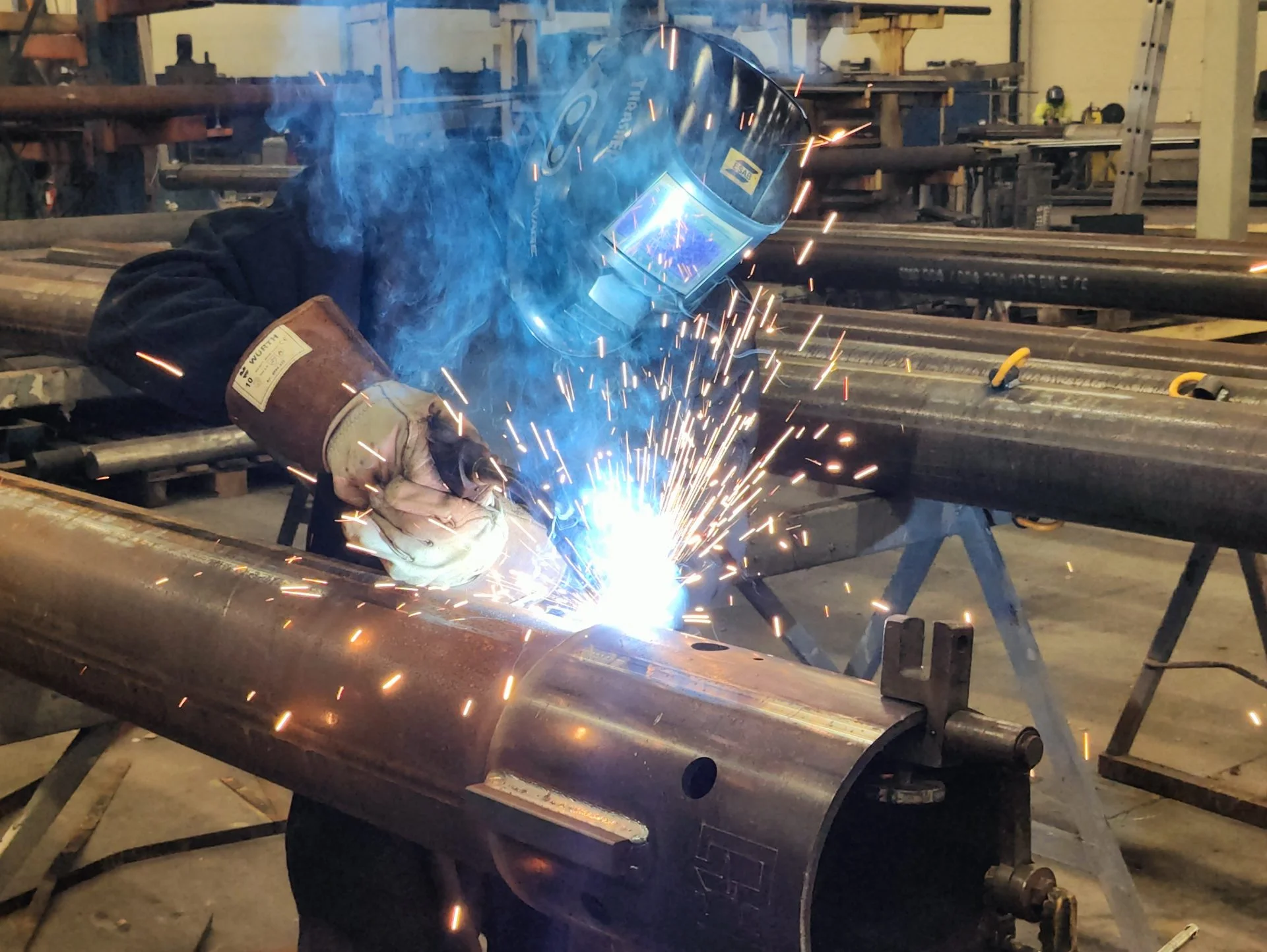
Screw pile. A screw pile has a smooth steel shaft with one or more welded helix plates at the tip. During installation, the pile rotates into the ground. The structural load transfers through the shaft to the helix plate, which distributes it into the load-bearing soil layer.
Ground screw. A ground screw has a continuous thread along the full length or most of the shaft. The structure resembles a large wood screw. During installation, the ground screw displaces soil sideways and compacts the surrounding ground. The ground screw stays in place through friction between the thread and the soil.
The difference is visible at the tip: a screw pile has a welded helix plate, a ground screw has a continuous thread along the full shaft.
Load capacity
The structural difference is directly reflected in load capacity.
Ground screw capacity is typically 10-50 kN per unit. This is sufficient for light structures such as decks, fences and small outbuildings, but not for load-bearing structures. Most ground screws do not have an engineered or certified load value.
Screw pile capacity varies by application but can reach up to 1,000 kN per pile. In residential construction, typical load per pile is 100-250 kN, which is many times greater than ground screw capacity.
In practice, significantly more ground screws are needed to carry the same load. For example, a garden building foundation may require 9 screw piles, but approximately 20 ground screws for the same structure. This increases both material costs and installation time.
Frost resistance
In Nordic countries, frost can penetrate up to two metres deep depending on soil type. The foundation must withstand frost heave, or the structure will move.
A screw pile helix plate is installed below the frost line into the load-bearing layer. The plate anchors the pile so that frost cannot lift it. The smooth steel shaft through the frost zone offers no grip for frost forces.
A ground screw's continuous thread passes through the entire soil profile, including the frost zone. The thread creates grip surface at all depths, and frost expansion grips the thread and pushes the ground screw upward. For this reason, the ground screw is more susceptible to frost heave and is not as suitable for frost-prone conditions.
On an open timber deck, a few millimetres of frost heave may not be a problem. On a glazed terrace, fixed structures and buildings, frost resistance is a requirement.
Extension and installation depth
Screw piles can be extended by joining shaft sections together. This enables installation deeper into the load-bearing layer, even when it is several metres below the surface. Extension is common, especially in soft soils.
A ground screw is typically a single piece 0.6-1.5 metres long. Extension is possible but not as common as in screw piling. Short installation depth means the ground screw cannot reach the load-bearing layer if it is deeper.
Certification and engineering
A screw pile is an engineered foundation element. Its capacity is designed for the specific loads of the project, installation is documented with torque monitoring, and products have material certificates. Screw pile manufacturers such as Paalupiste are ISO 9001 and EN 1090-1 certified.
Ground screws typically do not have a calculated load value, material certificate or installation documentation. This is not a problem for light applications, but for load-bearing structures, documentation and certification are often requirements.
Comparison table
| Property | Screw pile | Ground screw |
|---|---|---|
| Structure | Steel shaft + helix plate (one or more) | Continuous thread along full shaft |
| Load mechanism | Helix plate in load-bearing layer | Friction between thread and soil |
| Load capacity per unit | Up to 1,000 kN (engineered) | Typically 10-50 kN (uncertified) |
| Frost resistance | Yes (plate below frost line, smooth shaft) | No (thread provides grip in frost zone) |
| Installation depth | 1-30+ m (extendable) | 0.6-1.5 m (single piece) |
| Units needed for same load | Fewer (e.g. 9 pcs) | More (e.g. ~20 pcs) |
| Certification | ISO 9001, EN 1090-1, material certificates | Mostly uncertified |
| Typical applications | Houses, halls, infrastructure, solar farms | Decks, fences, light garden structures |
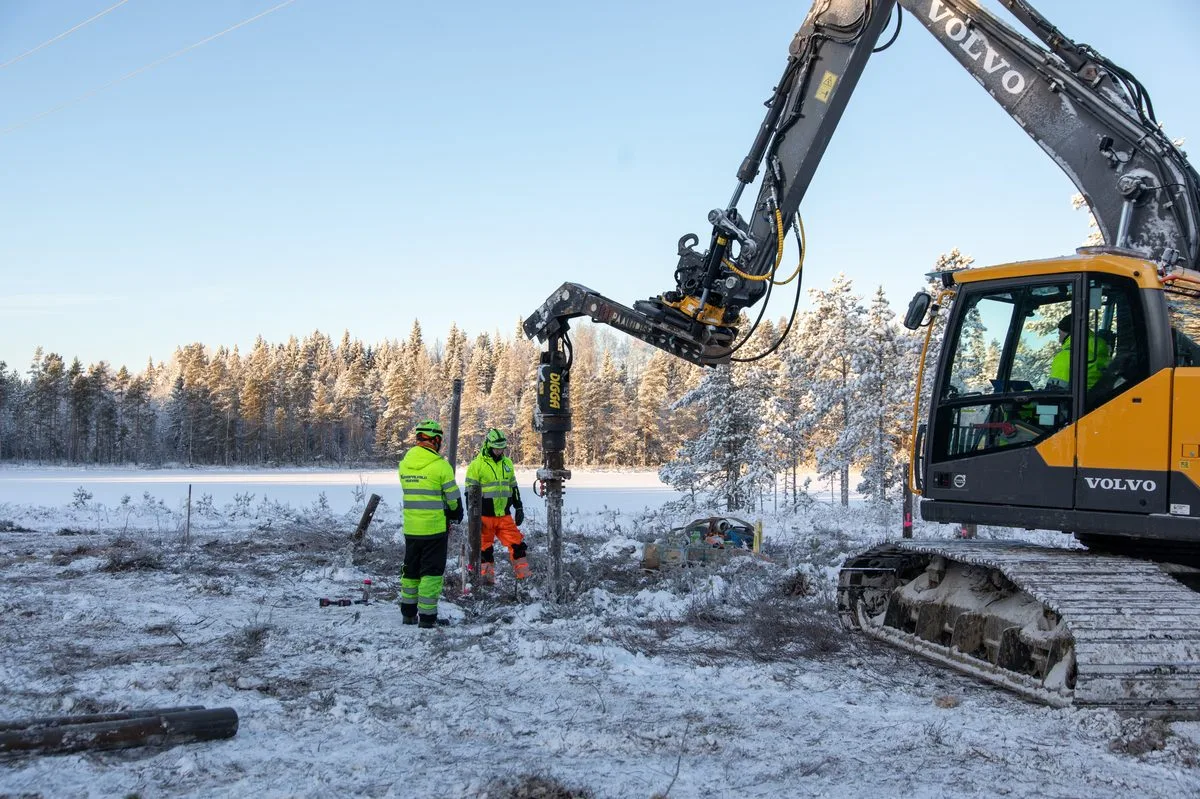
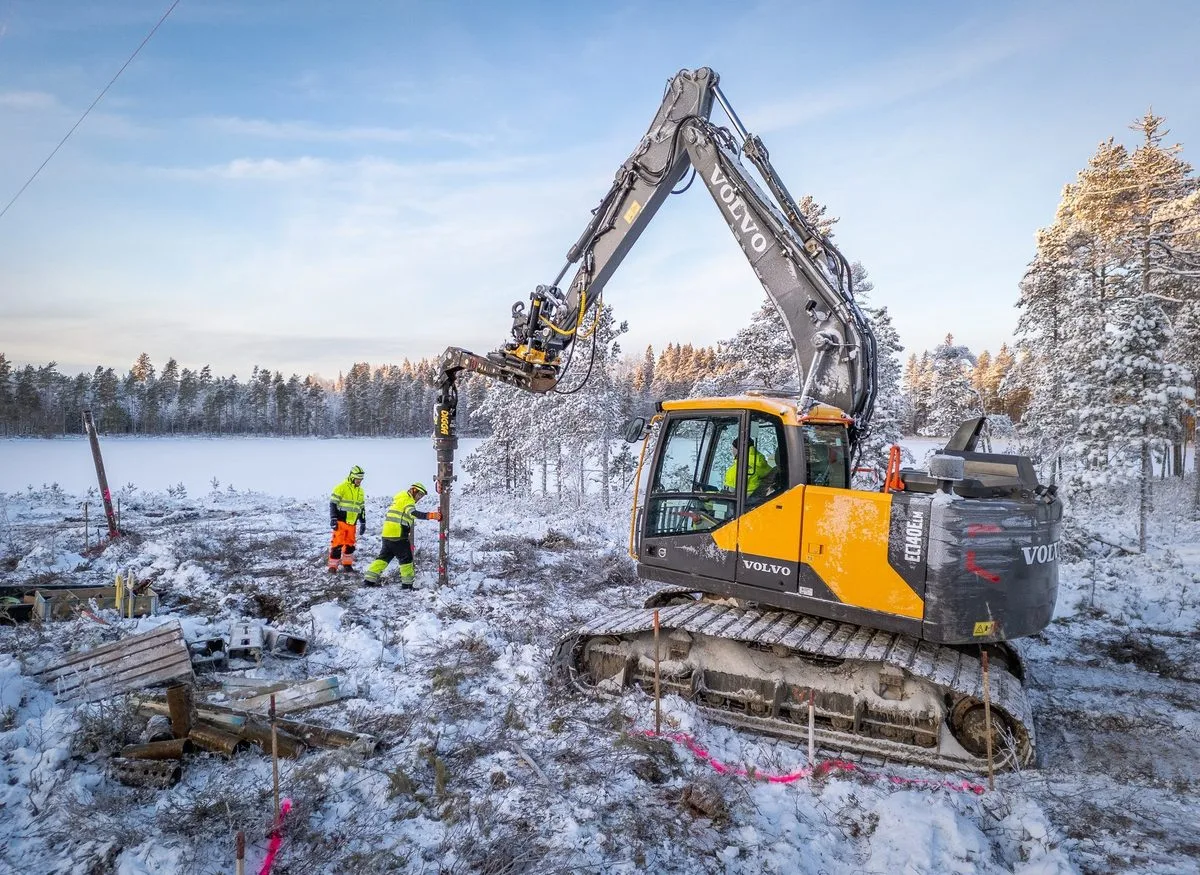
| Installation | Excavator (PRO) or hand machine (HELIX) | By hand or small machine |
When is a ground screw sufficient?
A ground screw is a viable solution when:
- The structure is light (open timber deck, fence, flagpole, small garden structure)
- Frost heave does not affect the function of the structure
- Loads are small and the structure does not require certified load capacity
- Soil is dense (sand, gravel), where friction is sufficient
In these applications, a ground screw is an affordable and fast solution.
When is a screw pile needed?
Screw piles are used in applications where:
- There are load-bearing requirements (buildings, halls, bridges, solar farms)
- The foundation must resist frost (practically all Nordic buildings)
- Soil is soft and the load-bearing layer is deeper (pile is extended)
- The structure is exposed to uplift forces (wind, water), where anchoring is critical
- A cost-effective and documented foundation solution is needed
Summary
Screw piles and ground screws are different products for different purposes. The choice depends on the project requirements: loads, frost conditions, soil type and structure type. If you are unsure which suits your project, ask a professional.