Why screw piles are ideal for deck foundations
A deck is a lightweight structure, but its foundations still need to be frost-proof, level and sufficiently load-bearing to keep the deck straight year after year. Screw piles meet these requirements without any excavation or concrete pouring.
Decks typically use Paalupiste HELIX screw piles (tube diameter Ø60.3 mm), which can be installed with the MP1 electric drill without an excavator. In softer ground conditions, Ø60.3 mm PRO piles with a larger helical plate and therefore higher load capacity can also be used.
A typical deck foundation is completed in 2 to 4 hours. Screw piles are load-bearing immediately, so frame construction can begin the same day.
Choosing the right pile
Pile length
Pile length depends on how high the deck sits above ground level:
- Low deck (0 to 400 mm above ground): 1.7 m pile. The helical plate reaches below the frost line, and the deck remains stable without frost heave.
- Raised deck (above 400 mm): 2.2 m pile. A longer pile is needed because part of the pile length remains above ground.
Pile length = embedment depth + visible section above ground. Sufficient embedment depth ensures frost protection and load capacity.
Consider frost depth beneath the deck. The deck surface prevents snow from accumulating underneath, which means the snow layer does not insulate the ground from frost. As a result, frost can penetrate deeper than normal beneath a deck, so sufficient pile embedment depth should not be overlooked.
Pile cap
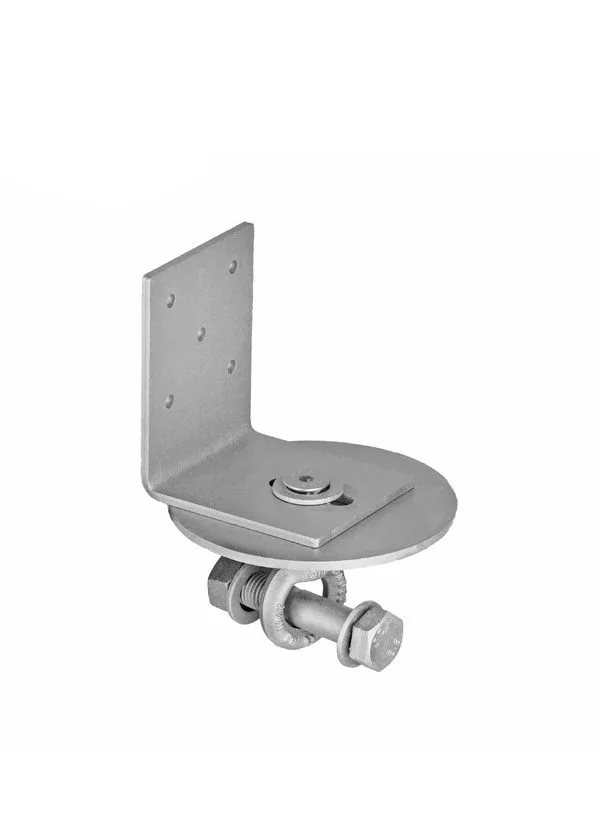
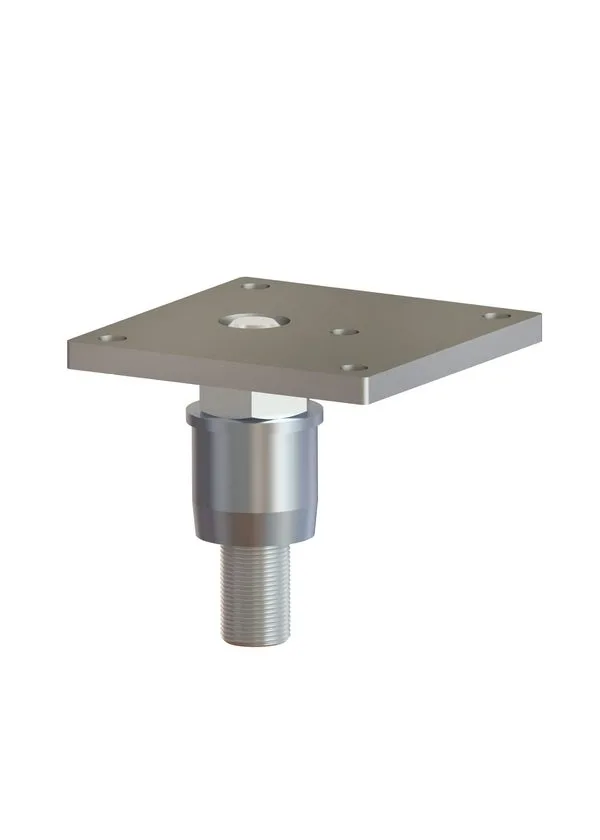
Decks most commonly use the LH bracket, to which the timber bearer is fixed directly. If height adjustment is required for each pile individually, the KSL150 adjustable bracket can be used, which allows height correction after installation.
Pile layout and span
Piles are placed beneath the load-bearing bearers, and their spacing is determined by the timber size used. A larger bearer spans a longer distance, meaning fewer piles are needed.
| Bearer size | Support spacing (max) | Suitability |
|---|---|---|
| 48 x 123 mm | 1,400 to 1,500 mm | Small decks |
| 48 x 148 mm | 1,600 to 1,700 mm | Small to medium decks |
| 48 x 198 mm | 2,200 to 2,400 mm | Medium to large decks |
Span values are based on C18 strength class pressure-treated timber, imposed load 2.0 kN/m².
Piles are placed approximately 15 to 20 cm inward from the deck edge, so that brackets and bearers remain hidden beneath the decking boards.
If the deck is built against a house wall, the wall side should be fixed directly to the wall structure. Piles should not be installed next to the wall, because the house footing spread and possible drainage may be in the way.
Using the span table and the deck dimensions, the number of piles can be calculated. Once the bearer size and deck measurements are known, determining pile positions is straightforward.
Why choose Paalupiste HELIX over a cheap import pile
Hardware stores and online retailers sell inexpensive screw piles, often originating from China. The price difference compared to Paalupiste HELIX piles may look significant, but the difference shows in practice:
- Steel quality: HELIX piles are manufactured from SSAB S420 steel in Finland. Cheap piles are often made from soft steel that cannot withstand installation torque. If the helical plate bends when hitting a stone, the pile is unusable.
- MP1 electric drill: Paalupiste hires out the MP1 installation drill for HELIX piles. No drill is available for cheap import piles, meaning installation must be done manually with a crowbar, which is considerably slower and more strenuous.
- 50-year warranty: HELIX piles carry a 50-year warranty. Cheap piles typically have no warranty.
- Hot-dip galvanising to ISO 1461: HELIX piles are hot-dip galvanised in accordance with ISO 1461, ensuring long service life in the ground. Cheap import piles may have inconsistent galvanising quality and thickness, without necessarily meeting any equivalent standard.
Installation steps
1. Marking and reference level
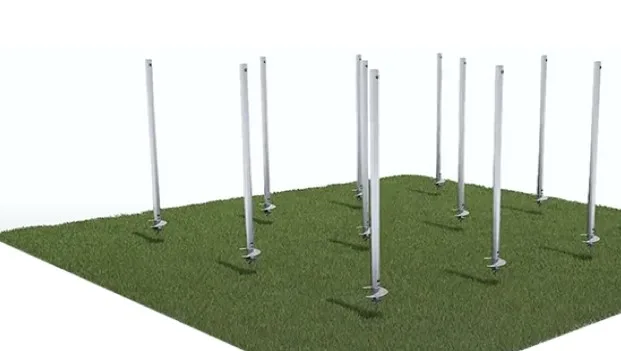
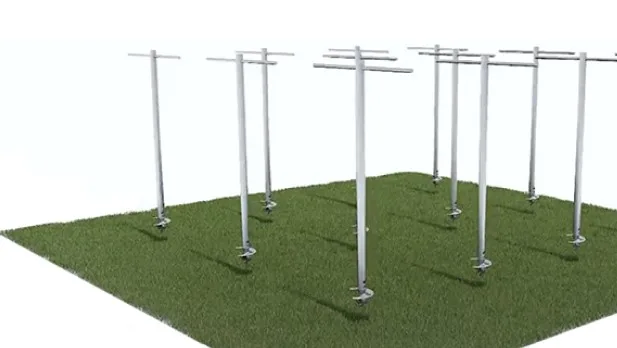
Pile positions are measured and marked on the ground according to the plan. At the same time, a reference level is established, which is used to set the top height of each pile during installation.
The level should be carefully planned in advance. If the deck is being built next to a back door, for example, you must ensure the door can still open fully once the finished deck is on the piles. The total deck height (pile top + bearer + joist + decking) must not exceed the underside of the door threshold.
If the threshold level does not allow a standard cross-joist frame where the joists sit on top of the bearers, the frame must be built at a lower profile. In this case, the joists are installed at the same level as the bearers using joist hangers. The result is equally strong, but the overall height is reduced by one timber depth.
2. Pile installation
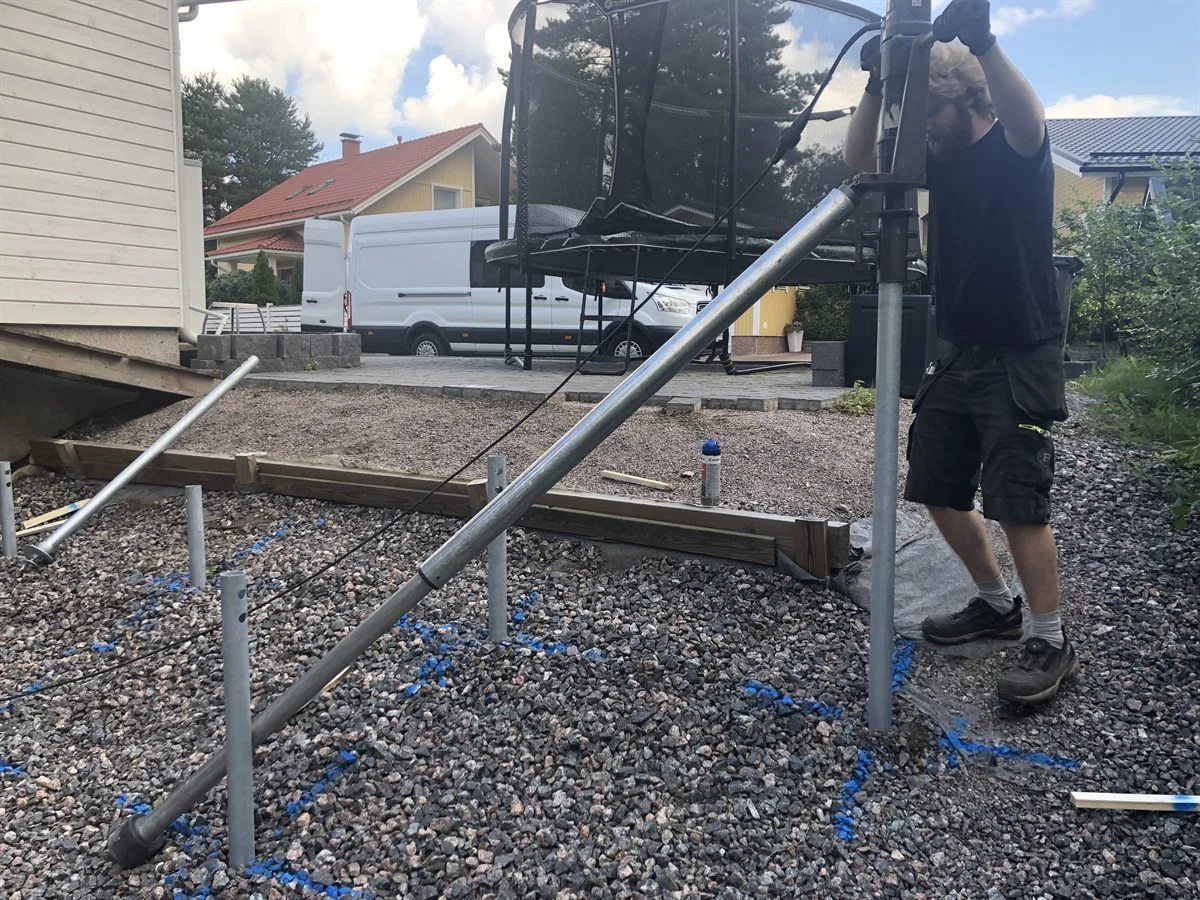
HELIX screw piles are installed using the hand-held MP1 electric drill. The drill is attached to the top of the pile, and the pile is screwed vertically into the ground. One person can install the piles, but working in pairs is faster and makes it easier to keep the pile plumb.
Installation with the electric drill is typically 5 to 10 times faster than manual installation with a crowbar. A crowbar is suitable for a few piles at most; for larger deck projects, the MP1 drill is practically essential.
3. Bracket installation
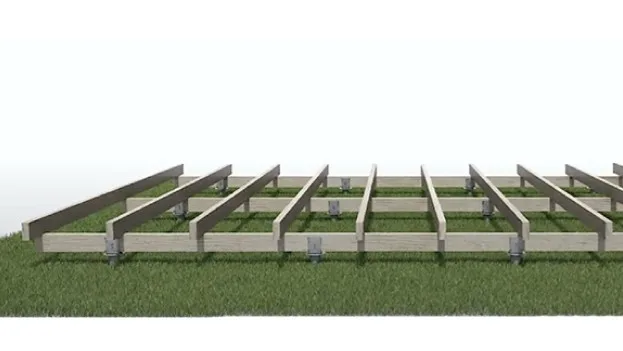
Once the piles are installed and the height level verified, pile caps are fitted to the top of each pile. The load-bearing timber bearers are then fixed to the brackets, followed by the joists and decking boards.
Comparison: deck foundation methods
| Feature | Screw pile (HELIX) | Concrete pier blocks |
|---|---|---|
| Frost protection | Helical plate below frost line | Not frost-proof without proper insulation |
| Excavation | Topsoil removal only | Digging required for each block and insulation |
| Installation time | 2 to 4 hours | Several hours + ground levelling |
| Load-bearing immediately | Yes | Yes |
| Uneven terrain | Adjustable embedment depth, works on slopes | Requires level surface or significant fill |
| Service life | 50-year warranty (HELIX) | Depends on conditions and installation |
When HELIX is not sufficient
The HELIX screw pile is designed for lightweight structures such as decks, fences and small garden buildings. If a load-bearing roof or glazed enclosure is to be built on top of the deck, the loads increase and a heavier-duty PRO screw pile (Ø76.1 mm or larger) may be required.