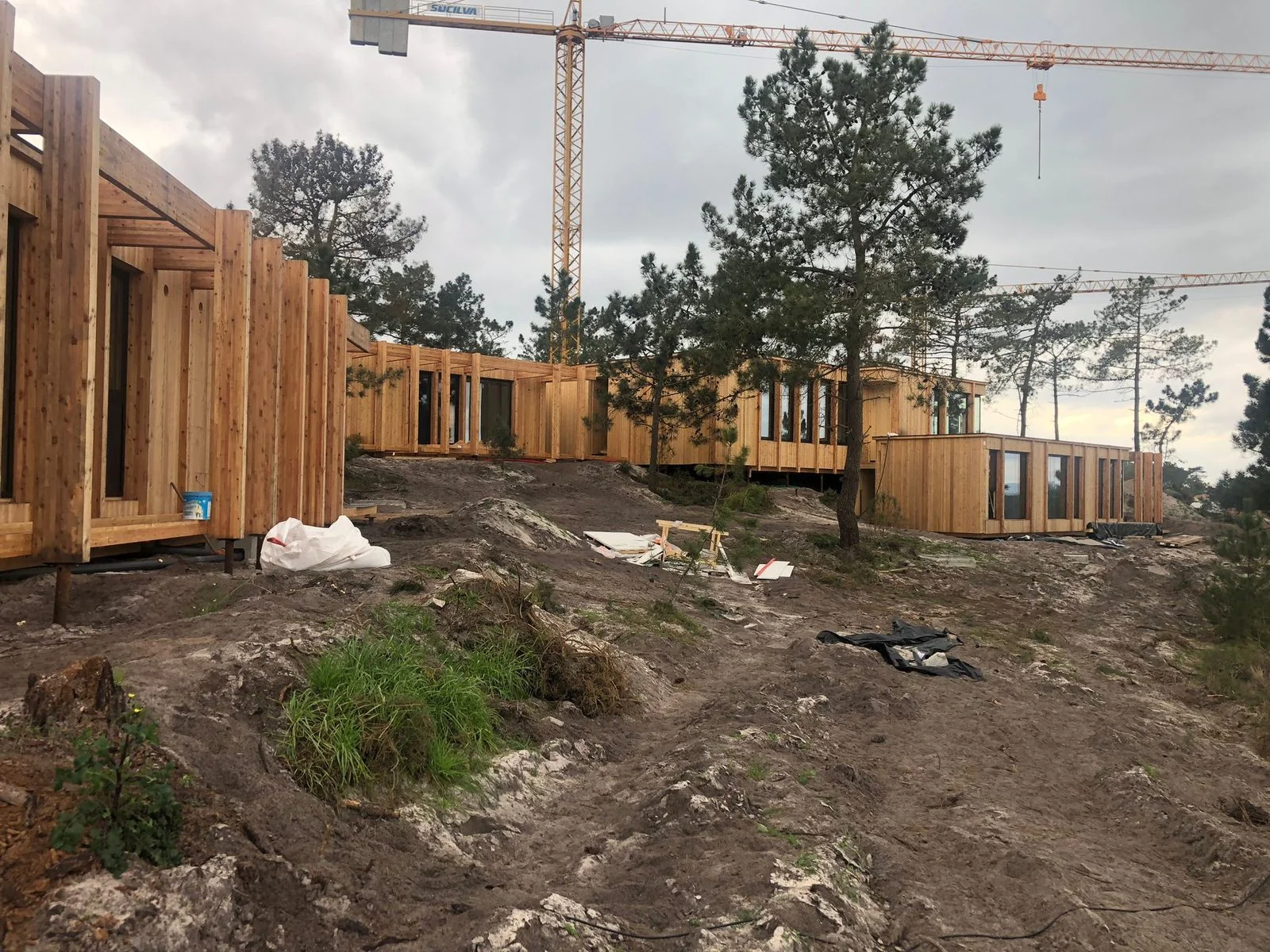
Why screw piles can be installed in winter
Installing a screw pile is a mechanical process: an excavator-mounted drive head screws the pile into the ground. The process requires no concrete or any other material whose curing depends on temperature. Once the pile has been screwed to the design depth and the installation torque has been measured, the foundation is ready and load-bearing immediately.
A concrete foundation, by contrast, requires temperatures above +5 °C for the cement to set properly. In freezing conditions, the water in the concrete mix freezes before it has cured, permanently weakening the strength. Winter concreting is possible using special methods such as heated formwork or frost-resistant mixes, but these add both cost and risk.
A screw pile foundation involves no work phase that requires a specific temperature. That is why installation works just as well in January as it does in July.
How frozen ground affects installation
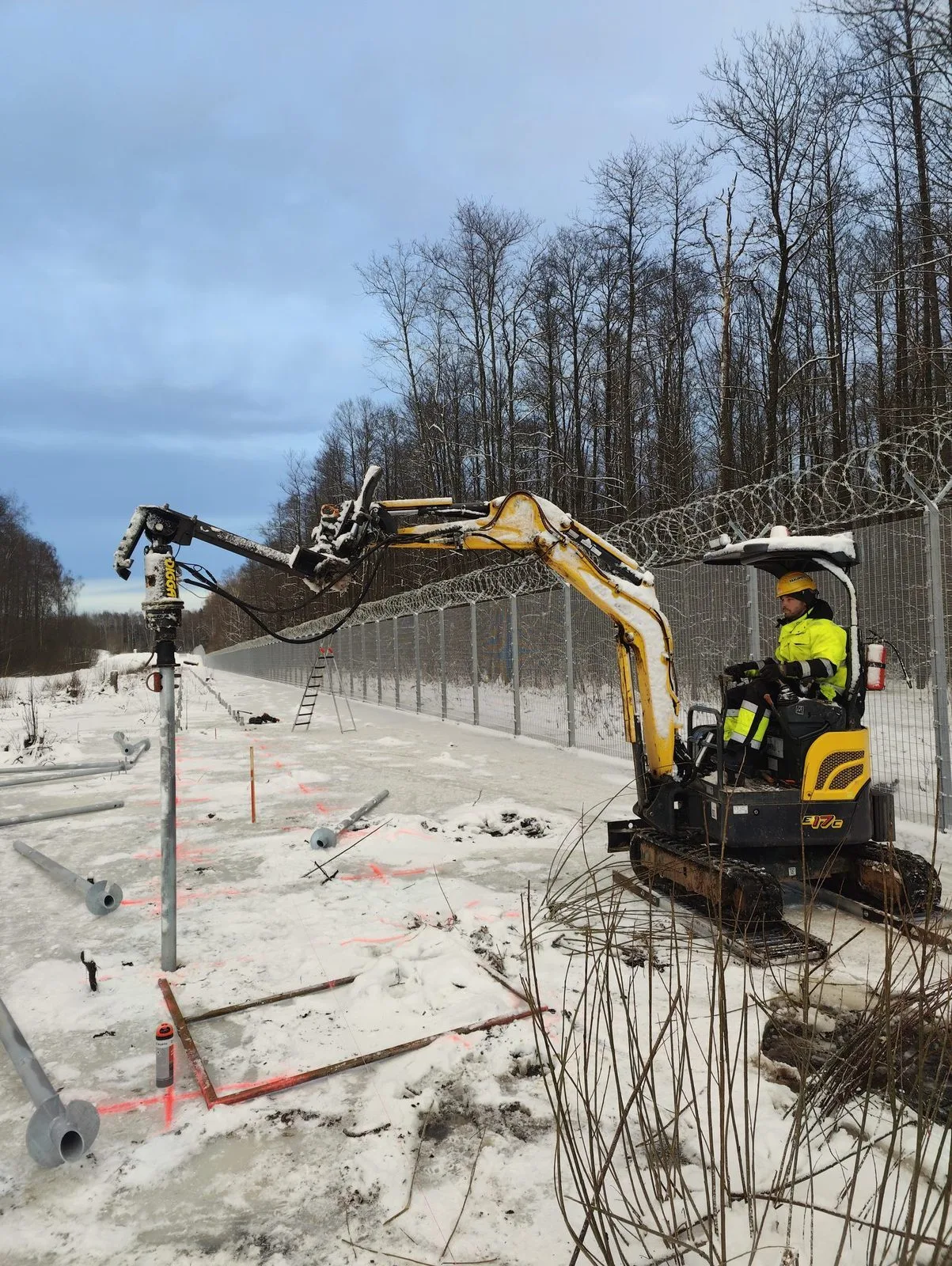
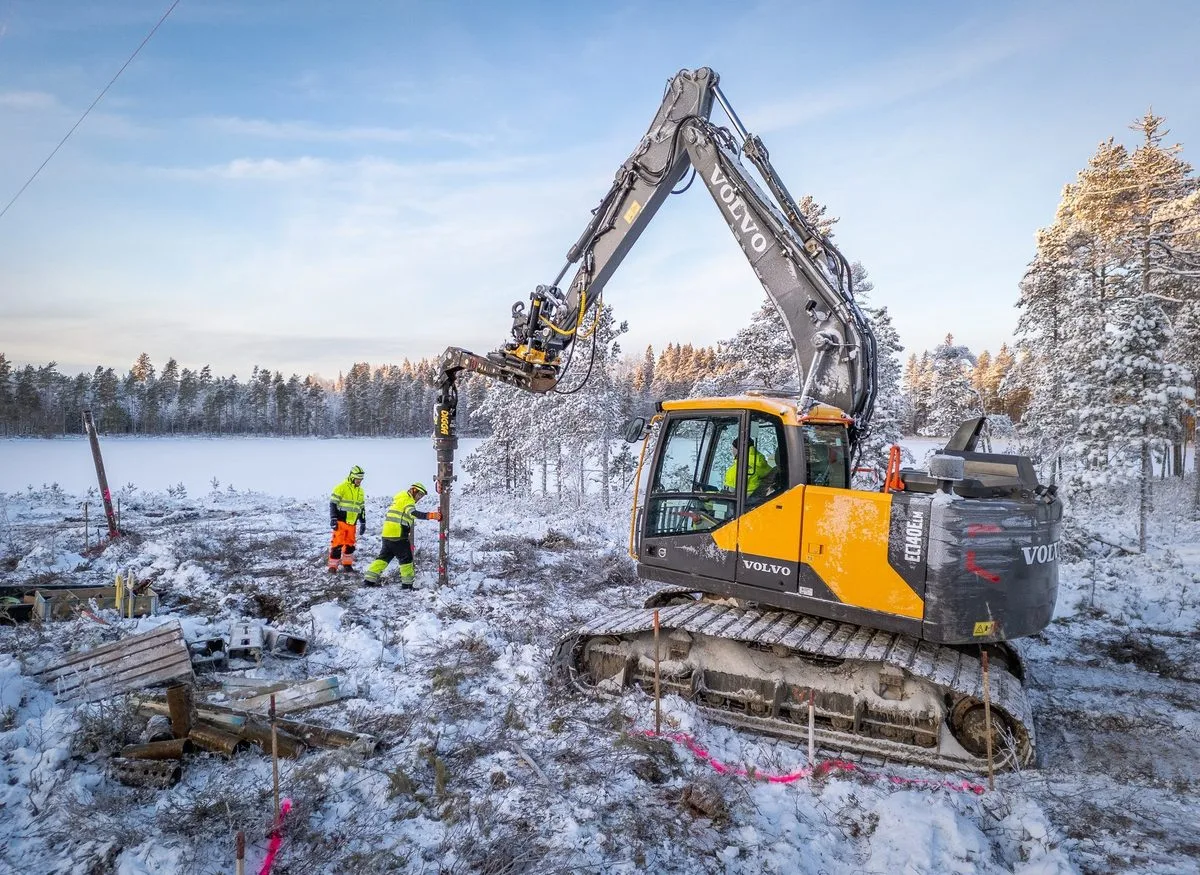
In Finland, the ground typically freezes to a depth of 0.5 to 1.5 metres, depending on the severity of the winter and the soil type. This frost layer increases installation resistance, but professional-grade equipment such as excavator-mounted Digga or HyperTorq+ drive heads produces sufficient torque even in frozen ground. In some cases, the frost layer is penetrated by pre-drilling with an earth auger bit or by breaking the frost with a hydraulic breaker attached to the excavator.
Once the frost layer has been penetrated, installation continues normally because the soil below is unfrozen. The load capacity of a screw pile is based on the helical plate anchoring into the load-bearing soil layer below the frost line. Because the bearing layer is always unfrozen, the time of installation does not affect the final load capacity of the pile.
Advantages of winter installation for the builder
The schedule does not stop for winter
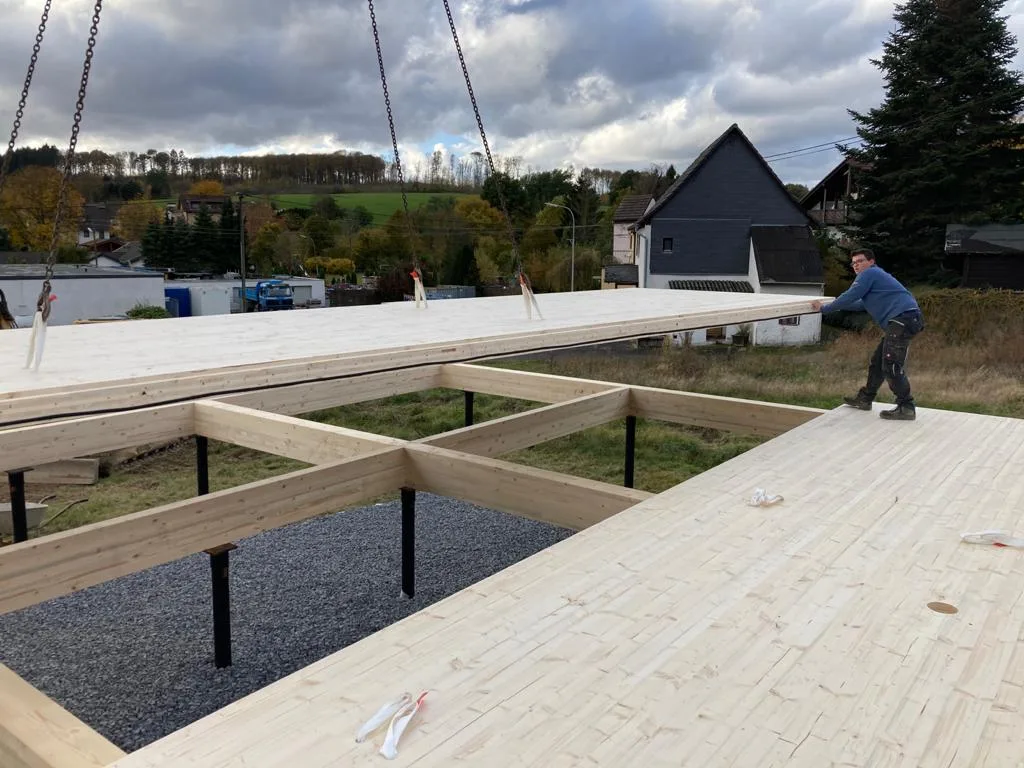
In conventional construction, the foundation phase is often postponed until spring because concrete foundations are not practical in freezing conditions. This means the entire project schedule shifts forward by months. With screw piles, the foundations can be completed in winter so that framing can begin as soon as spring arrives.
Better availability of capacity
The construction season in Finland runs mainly from April to October. In winter, both installation equipment and labour are more readily available, and lead times are shorter.
Site conditions can actually be better
Frozen ground supports machinery better than soft spring soil. Particularly on clay soils and peatlands, winter installation can be easier in practice, because machines do not sink into the ground and the site stays in better condition.
Comparison: foundation solutions in winter
| Feature | Screw pile foundation | Concrete foundation |
|---|---|---|
| Installation in freezing conditions | Yes, standard process | Requires special methods |
| Curing time | None, load-bearing immediately | Nominal strength 28 days, longer in winter |
| Temperature dependency | No restriction | Requires above +5 °C (or additional cost) |
| Excavation work | Topsoil removal only | Deeper excavation, more difficult in frozen ground |
| Site bearing capacity | Frozen ground supports well | Frozen ground makes excavation harder |
Experience of winter installations in demanding conditions
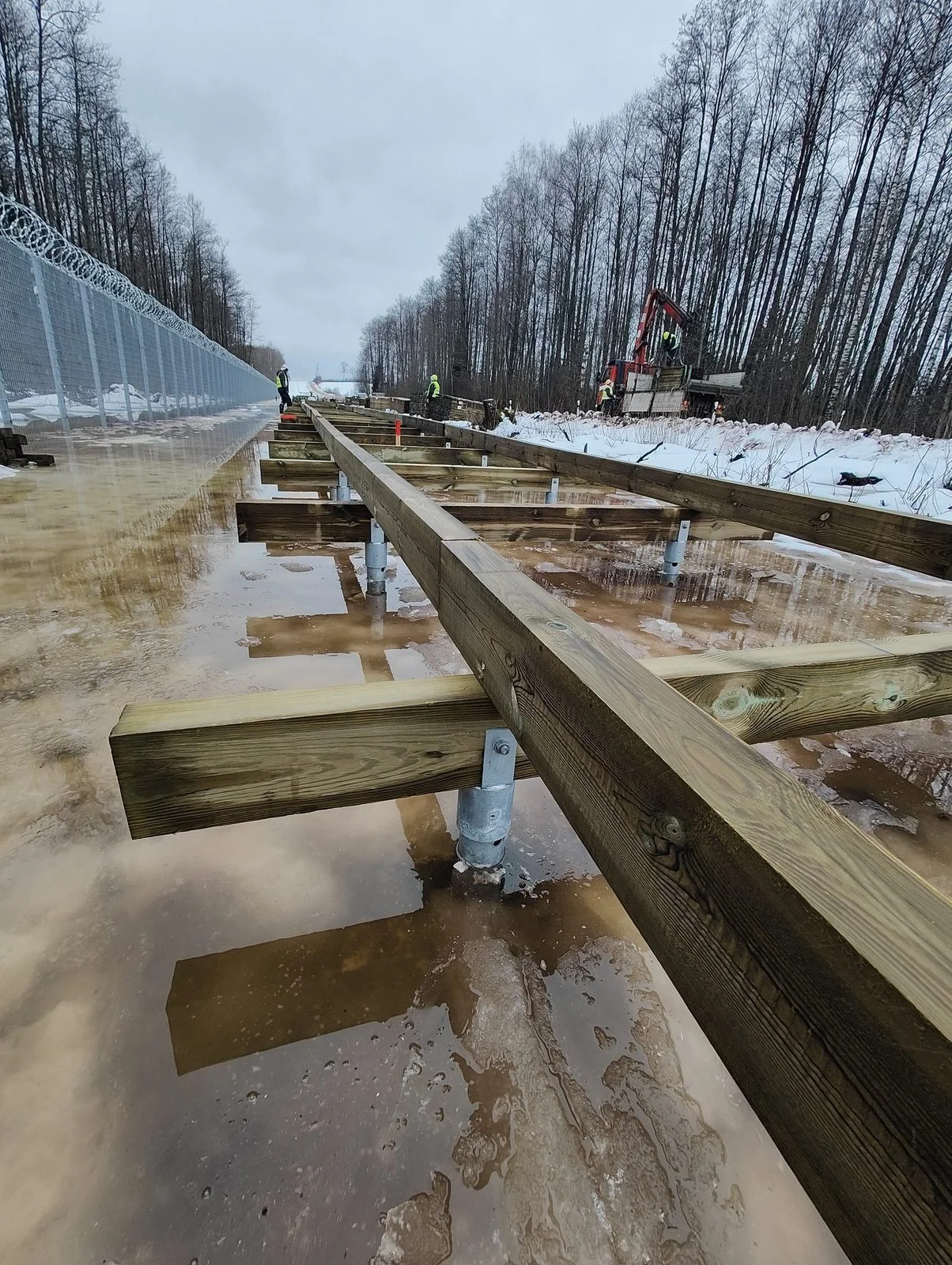
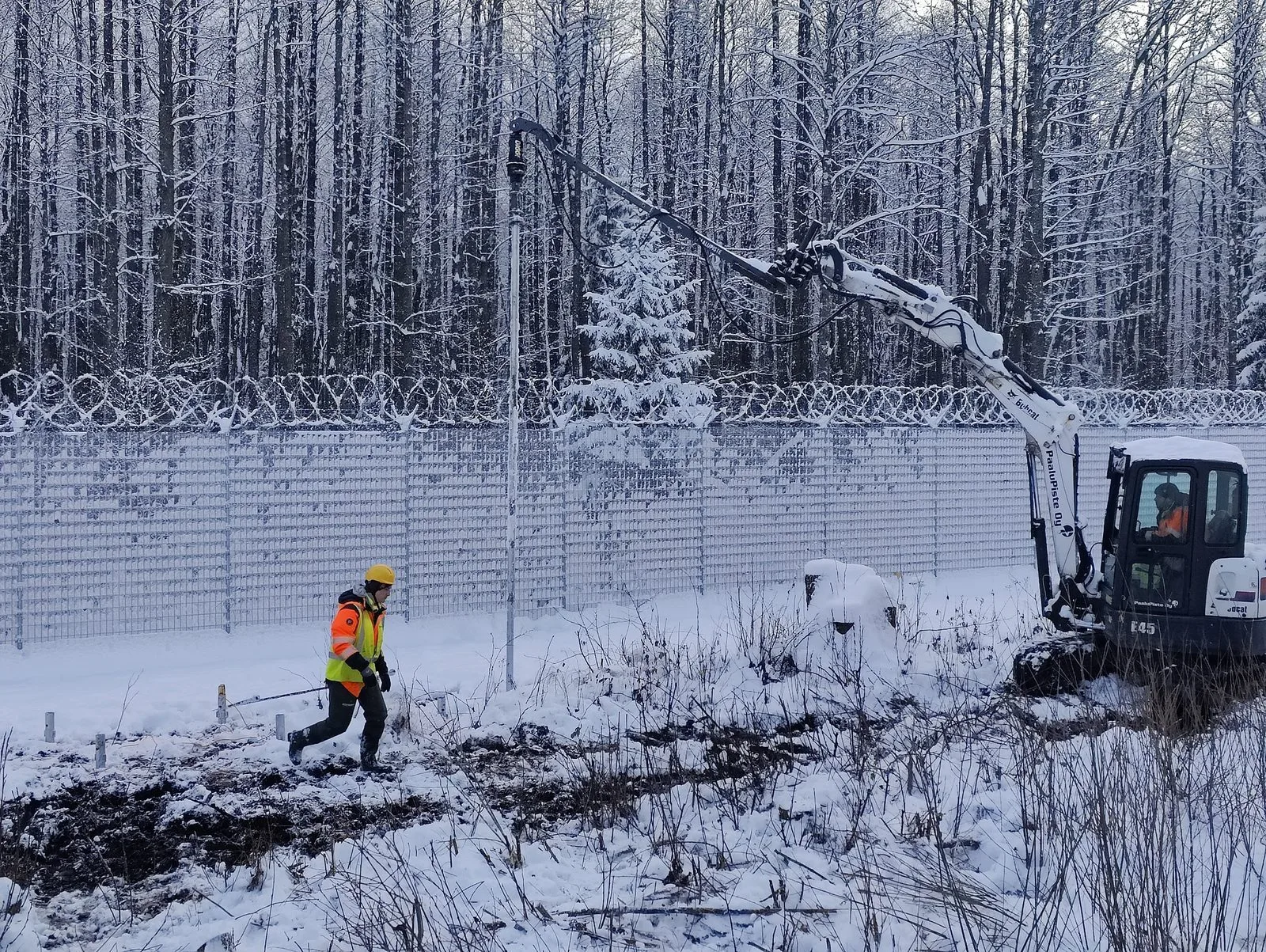
Paalupiste has carried out screw pile installations in challenging winter conditions across Europe. In the project shown in the images, hot-dip galvanised screw piles were installed in snowy, frozen swamp terrain using a compact excavator. Installation proceeded as planned despite the weather conditions.
When winter installation is not possible
Screw pile installation may be limited by the following conditions, regardless of the season:
- Bedrock very close to the surface (less than approximately one metre deep), preventing sufficient embedment depth for the pile.
- Large boulders in the pile location, blocking the pile from advancing.
These limitations are related to the ground conditions, not to winter. They can be identified through a site investigation or test piling before the main installation.